Pool Care
Why Is My Pool Water Cloudy in Summer? (And How to Fix It Fast)
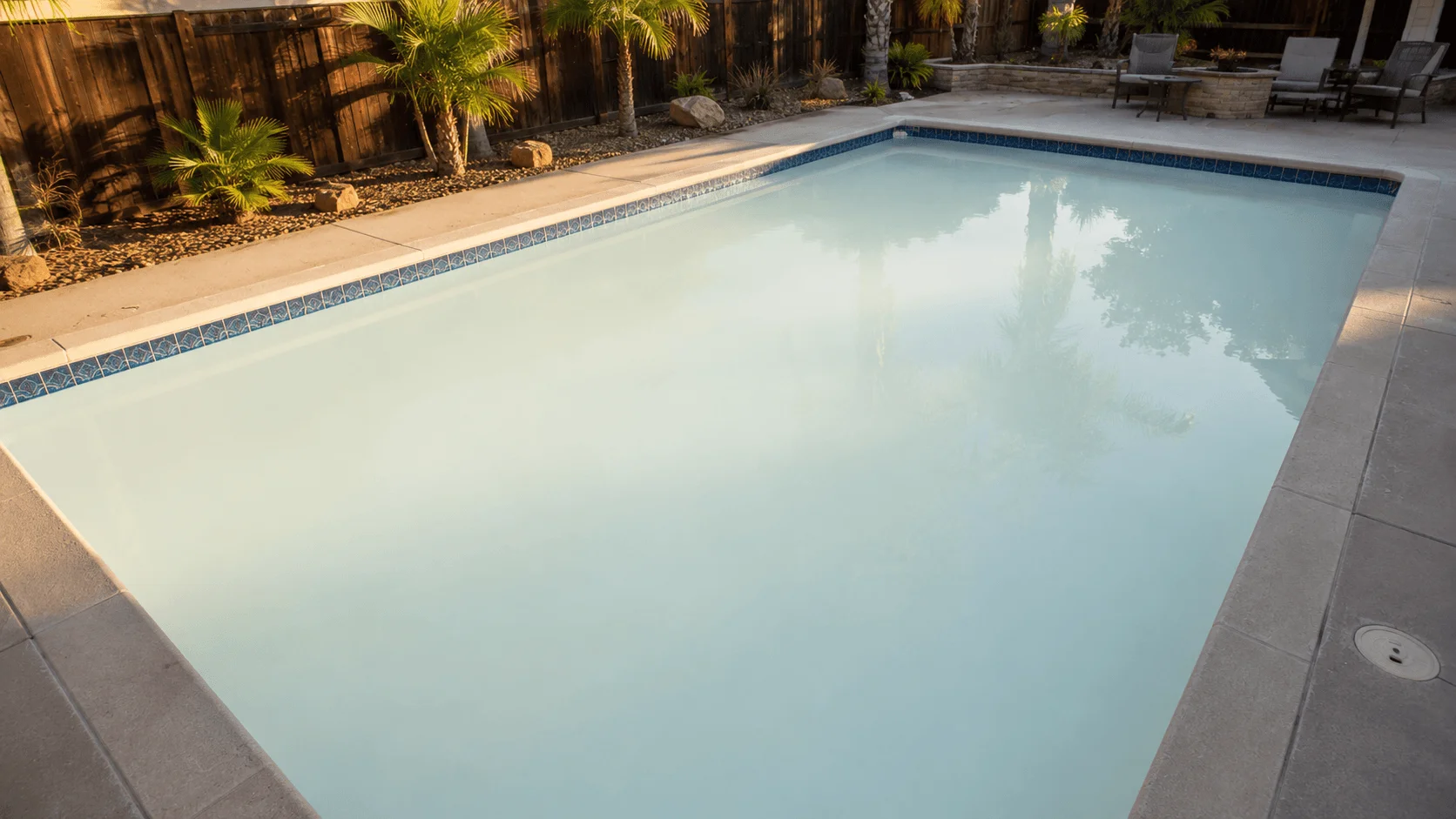
Cloudy pool water in summer is usually caused by low chlorine, a dirty filter, unbalanced pH, or early-stage algae. The sun burns off chlorine faster in hot weather, and heavy pool use adds oils and bacteria. To fix it: test your water, shock the pool, run your pump for 24 hours, and clean your filter. Most cloudy pools clear up within 1 to 3 days.
That Milky Look Isn't Normal — Here's What's Going On
You wake up, throw on your swimsuit, walk outside — and your pool looks like someone dumped milk in it. Not exactly the crystal-clear oasis you were hoping for.
If this sounds familiar, don't panic. Cloudy pool water is one of the most common problems North County San Diego homeowners deal with during summer. And the good news? It's almost always fixable once you figure out what's causing it.
In this guide, we'll break down exactly why your pool gets cloudy in summer, the fastest ways to fix it, and how to stop it from happening again. Let's dive in. (Pun absolutely intended.)
From Our Experience: After 12+ years of maintaining pools across Vista, Oceanside, Carlsbad and Escondido, we can tell you that cloudy water is the number one call we get during summer. In most cases, it comes down to one of three things: low chlorine, a tired filter, or chemistry that drifted out of range. The fix is usually faster than people expect — but catching it early makes all the difference.
What Actually Causes Cloudy Pool Water in Summer?
Cloudy pool water happens when tiny particles — dead bacteria, algae cells, body oils, sunscreen, dirt or calcium crystals — float in the water. They're too small to see individually, but together they block light and make your pool look hazy or milky.
In North County San Diego, summer makes this worse for a few reasons:
The sun eats your chlorine. UV rays break down chlorine fast. A pool that tested fine on Monday can be dangerously low by Wednesday.
More swimmers = more contamination. Sunscreen, sweat, oils and bacteria all add up. After a pool party in Oceanside or a weekend of kids splashing in Carlsbad, your sanitizer can't keep up.
Higher temperatures = faster algae. Warm water is a playground for algae spores. If chlorine drops even slightly, algae starts multiplying — and cloudiness is the first sign.
Hard water. San Marcos and Escondido have some of the hardest water in the county. High calcium levels cause tiny crystals to form in the water, creating that whitish haze.
Sometimes it's just one of these. Sometimes it's all four at once. Either way, the fix starts with figuring out which one is your culprit.
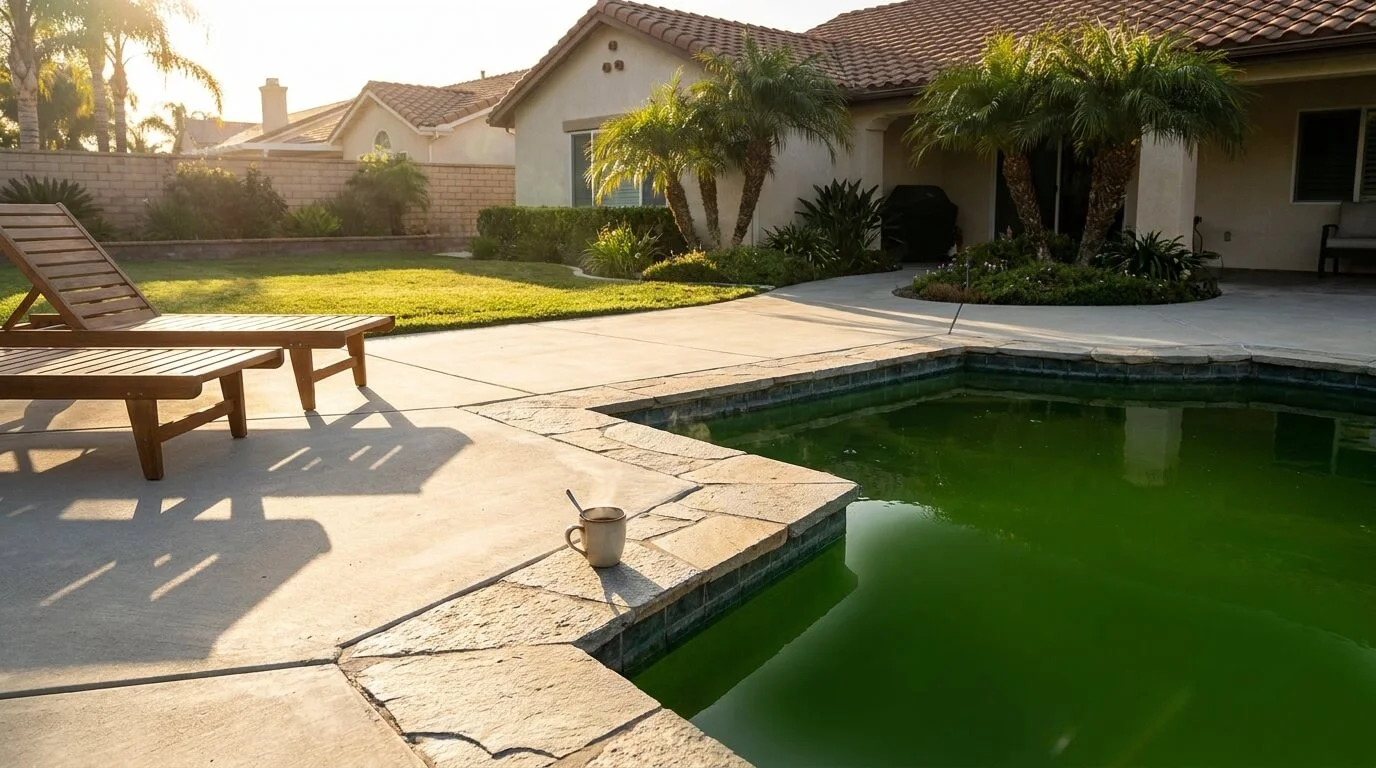
If your pool has already gone from cloudy to green, that's a different problem — check out our guide on why your pool is green and cloudy for that situation.
How to Fix Cloudy Pool Water — Step by Step
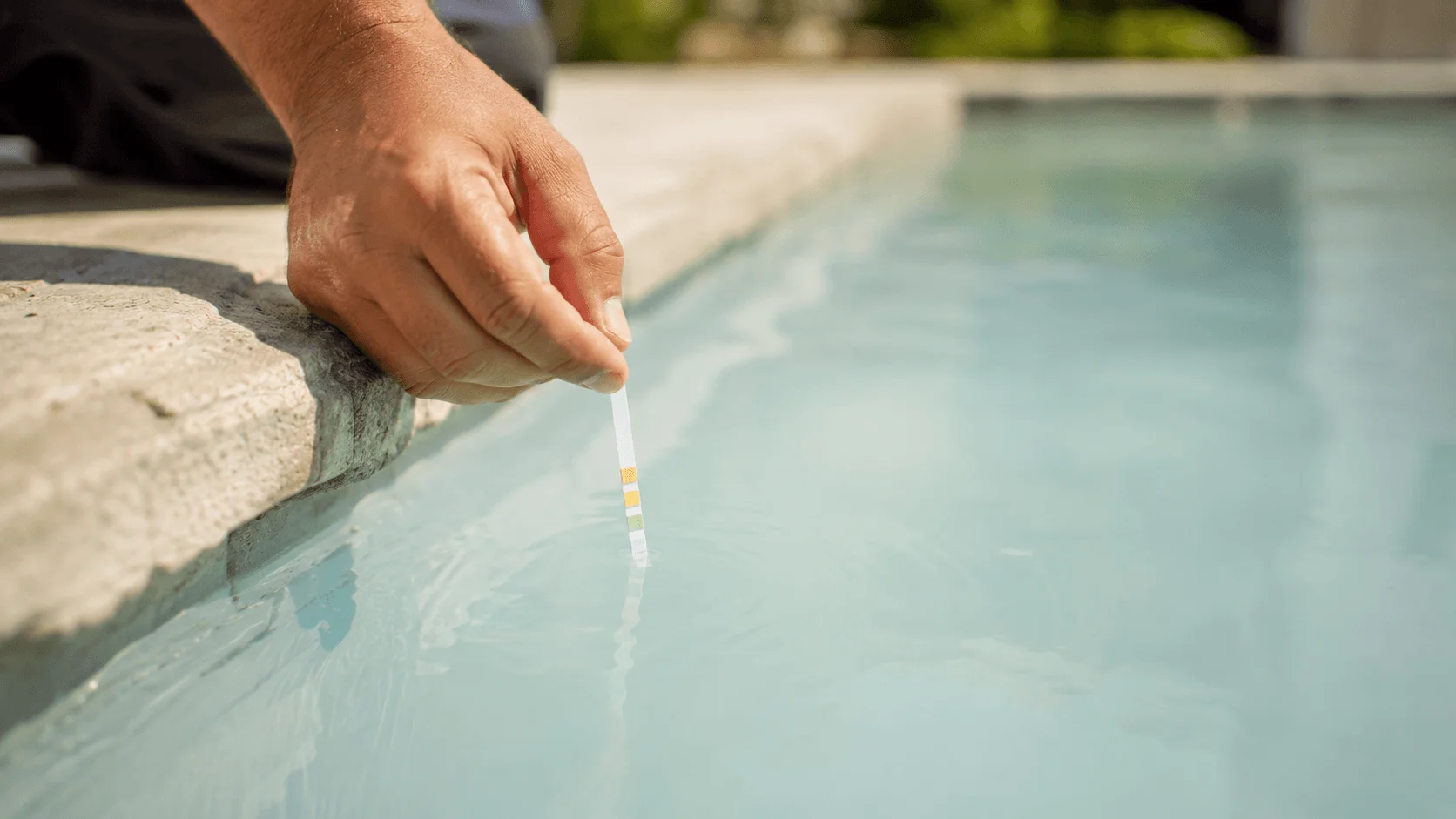
The fastest way to clear a cloudy pool is to test the water first, correct the chemistry, and let your filter do the heavy lifting. Most cloudy pools clear up in 1 to 3 days when you treat the right problem.
Here's the step-by-step process our team uses on every cloudy pool call in North County:
Test your water. Check chlorine, pH and alkalinity. You want chlorine between 1–3 ppm, pH between 7.2–7.6, and alkalinity between 80–120 ppm. If any of these are off, that's likely your answer.
Shock the pool. If free chlorine is below 1 ppm, your pool needs a shock treatment. This dumps a large dose of chlorine to kill bacteria and algae that are causing the cloudiness.
Run your pump for 24 hours straight. Your filter can't catch particles if it's not running. During a cloudiness event, keep it running nonstop until the water clears.
Clean or backwash your filter. A dirty filter is like trying to vacuum with a full bag — it just pushes stuff around. Clean it before you start and again after 24 hours.
Add a clarifier (optional). Pool clarifiers bind tiny particles together so your filter can catch them. This speeds up the clearing process, especially for stubborn haze.
For most Vista and Oceanside homeowners, this process clears the water in 24 to 48 hours. If your pool is still cloudy after 3 days of treatment, you might have an equipment issue — a failing pump, cracked filter, or poor circulation — that needs a professional to diagnose.
How to Stop Cloudy Water Before It Starts
Fixing cloudy water is great. Never getting it in the first place is even better. Here's how to keep your pool clear all summer in San Diego's North County climate:
Test your water twice a week during summer. Chemistry changes fast in the heat. Don't wait for cloudiness to show up — catch the imbalance early.
Run your pump 8 to 12 hours per day. In San Diego summers, 4 to 6 hours isn't enough. Your water needs full turnover to stay clear.
Clean your filter regularly. Backwash sand filters when pressure rises 8–10 psi above normal. Rinse cartridge filters monthly. Replace them every 2 to 3 seasons.
Shock after every pool party. Heavy use dumps contaminants into the water. A quick shock treatment that evening prevents next-morning cloudiness.
Brush and skim weekly. Brushing prevents algae from grabbing onto surfaces. Skimming removes debris before it breaks down and clouds the water.
Consistent weekly maintenance is the simplest way to avoid cloudy water problems entirely. Many Carlsbad and San Marcos homeowners find that having a professional handle the weekly routine saves them time — and keeps their pool clearer than they could manage on their own.
When Should You Call a Pool Professional?
If you've shocked the pool, cleaned the filter, balanced the chemistry and run the pump for 48 hours — and the water is still cloudy — it's time to call a professional. Persistent cloudiness can point to a deeper equipment issue that's hard to diagnose without experience.
Signs you need a pro:
Cloudiness keeps coming back every week
Your filter pressure stays high even after cleaning
The pump sounds louder or different than normal
You see white flakes or scaling on tile (calcium problem)
The water smells strongly of chlorine (paradoxically, this means not enough free chlorine)
A CPO® certified technician can run diagnostics on your equipment, test your water at a deeper level, and identify problems that home test kits miss.
If your cloudy pool has already turned green, don't wait — read our guide on what to do when your pool turns green overnight.
Frequently Asked Questions
Can I swim in a cloudy pool?
It's not recommended. Cloudy water often means low chlorine or high bacteria levels, which can cause skin irritation, ear infections or stomach illness. Wait until the water is clear and chemistry is balanced before swimming.
How long does it take to clear a cloudy pool?
Most cloudy pools clear up in 1 to 3 days with proper treatment — shock, filter cleaning, and continuous pump operation. If it's still cloudy after 3 days, you may have an equipment or circulation problem that needs professional attention.
Does baking soda fix cloudy pool water?
Only if low alkalinity is the cause. Baking soda raises alkalinity, which can help stabilize pH. But if cloudiness is caused by low chlorine, a dirty filter, or algae — baking soda won't help and can actually make it worse.
Why does my pool get cloudy after shocking?
This is normal and temporary. Shocking kills bacteria and algae, which releases dead particles into the water. Your filter needs 12 to 24 hours to clear them out. Run the pump continuously and the cloudiness should fade.
Keep Your Pool Crystal Clear This Summer
Cloudy pool water is frustrating — but it's one of the easiest pool problems to fix when you know what to look for. Test your water regularly, keep your filter clean, run your pump long enough, and shock after heavy use.
If you're tired of chasing cloudy water every week, Brothers Pool and Spa offers weekly pool maintenance for homeowners across Vista, Oceanside, Carlsbad, San Marcos and Escondido. We handle the chemistry, cleaning and equipment checks — so you just enjoy the pool.
Sources
Written by the Brothers Pool and Spa team — CPO® certified pool professionals serving North County San Diego for over 12 years. We provide weekly pool maintenance, calcium removal, green pool treatment and equipment repair in Vista, Oceanside, Carlsbad, San Marcos and Escondido.
Serving North County San Diego since 2013 · 760-622-0574 · brotherspoolandspa.com
Frequently Asked Questions
Can I swim in a cloudy pool?+
It's not recommended. Cloudy water often means low chlorine or high bacteria levels, which can cause skin irritation, ear infections or stomach illness. Wait until the water is clear and chemistry is balanced before swimming.
How long does it take to clear a cloudy pool?+
Most cloudy pools clear up in 1 to 3 days with proper treatment — shock, filter cleaning, and continuous pump operation. If it's still cloudy after 3 days, you may have an equipment or circulation problem that needs professional attention.
Does baking soda fix cloudy pool water?+
Only if low alkalinity is the cause. Baking soda raises alkalinity, which can help stabilize pH. But if cloudiness is caused by low chlorine, a dirty filter, or algae — baking soda won't help and can actually make it worse.
Why does my pool get cloudy after shocking?+
This is normal and temporary. Shocking kills bacteria and algae, which releases dead particles into the water. Your filter needs 12 to 24 hours to clear them out. Run the pump continuously and the cloudiness should fade.