Equipment Care
The Complete Saltwater Pool Guide for Homeowners
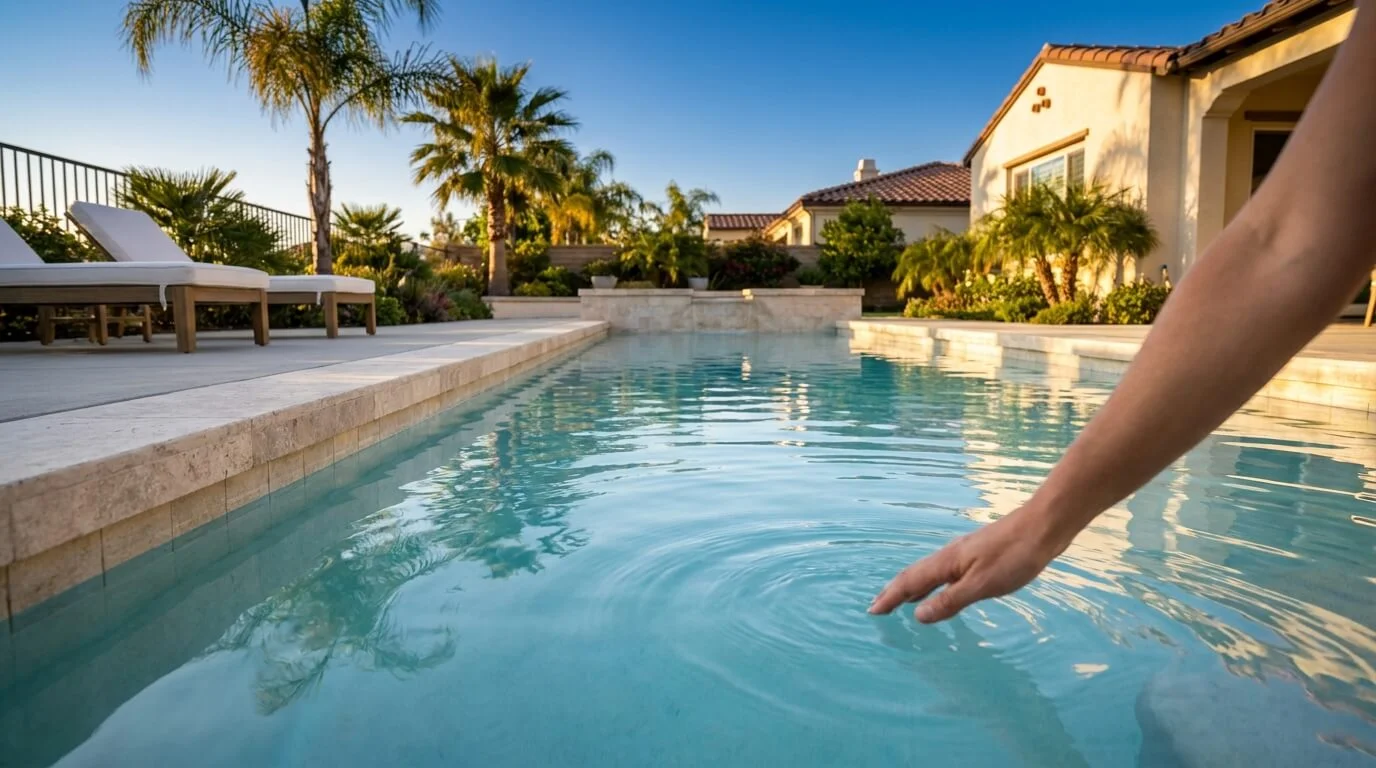
A saltwater pool uses a salt chlorine generator to convert dissolved salt into chlorine through electrolysis. The water feels softer and silkier, with less chlorine smell and less skin irritation than traditional pools. Salt levels are kept at 3,000-3,500 ppm — about 1/10th of ocean water. A salt system costs $1,000-$2,500 to install, but saves $200-$400 per year in chemical costs. The salt cell typically lasts 3-7 years before needing replacement.
What Exactly Is a Saltwater Pool?
Let's clear up the biggest misconception first: a saltwater pool is NOT filled with ocean water. You won't taste salt when you swim. The water actually feels like a tear — barely salty, incredibly smooth, and way more comfortable than a regular chlorine pool.
A saltwater pool uses a device called a salt chlorine generator (or salt cell) to turn dissolved salt into chlorine through a natural process called electrolysis. So yes — a salt pool still uses chlorine. It just makes its own chlorine on-site instead of you adding chemicals manually every week.
The salt level stays around 3,000 to 3,500 parts per million — roughly 1/10th of ocean water. You won't taste it, but you'll definitely feel the difference. The water feels silky, smooth, and noticeably gentler on your skin and eyes.
From Our Experience: We've converted dozens of pools across Vista, Oceanside and Carlsbad from traditional chlorine to saltwater systems over the past 12 years. The number one thing clients tell us after the switch? "Why didn't I do this sooner?" The water quality difference is dramatic — and the reduced maintenance makes pool ownership so much easier.
How Does a Saltwater Pool Work?
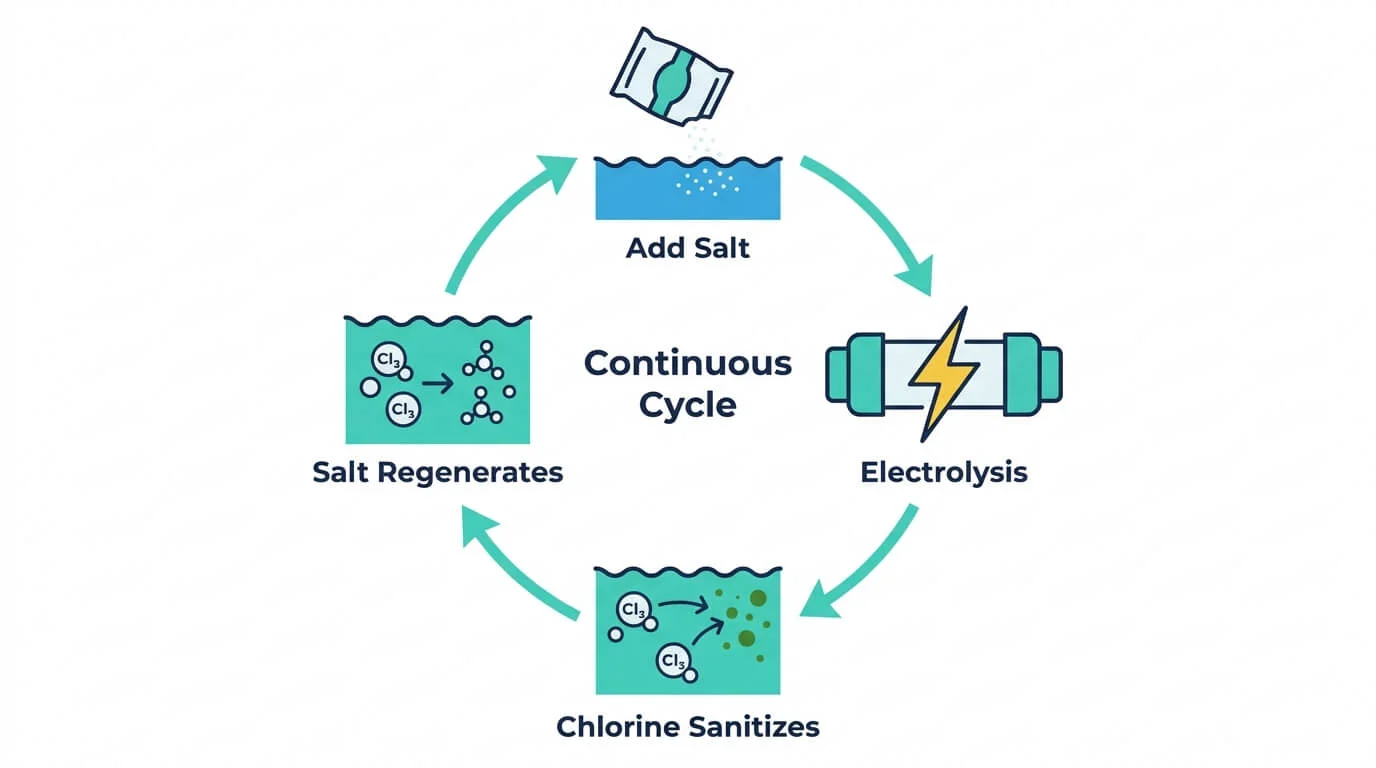
The process is actually pretty simple. Here's what happens inside your pool's plumbing:
You add pool-grade salt to the water (about 400-800 pounds for a typical pool — done once).
Water flows through the salt cell as part of normal circulation.
Electrolysis happens — an electrical charge splits the salt (sodium chloride) and produces chlorine gas.
That chlorine dissolves back into the water and sanitizes the pool — killing algae, bacteria and contaminants.
The chlorine converts back to salt and the cycle repeats. It's a continuous loop.
The result? A steady, consistent supply of fresh chlorine — without the harsh chemical spikes you get from manually dumping chlorine into the pool. That's why salt pools smell better, feel better, and stay cleaner between service visits.
Saltwater Pool vs. Chlorine Pool — What's the Real Difference?
Both pool types use chlorine to sanitize. The difference is HOW the chlorine gets into the water. Here's a straightforward comparison for North County San Diego homeowners:
Water feel: Saltwater pools feel noticeably softer and silkier. Traditional chlorine pools can feel harsher, especially right after chemical treatment.
Skin and eye comfort: Salt pools produce fewer chloramines — the byproduct that causes red eyes, itchy skin, and that "pool smell." If anyone in your family has sensitive skin, eczema, or allergies, salt is a game-changer.
Maintenance: Salt pools require less hands-on chemical management. The generator handles daily chlorination automatically. Traditional pools need manual chlorine dosing at least weekly.
Chemical costs: Salt pools cost roughly $50-$100 per year in chemicals, compared to $250-$400 for traditional chlorine pools. That's a significant savings over time.
Upfront cost: A salt chlorine generator runs $1,000-$2,500 installed. Traditional chlorine pools have lower startup costs but higher ongoing chemical expenses.
Equipment life: Salt cells need replacement every 3-7 years ($700-$1,000). Traditional chlorine systems don't have this replacement cost, but you're buying chemicals year-round instead.
For Oceanside and Carlsbad homeowners who use their pools year-round, the long-term savings from a salt system usually pay for the upfront investment within 2-4 years.
Benefits of a Saltwater Pool in San Diego
North County San Diego's climate makes saltwater pools an especially good fit. Here's why:
Softer, silkier water. Salt acts as a natural water softener. The water feels luxurious — many people describe it as swimming in silk.
No harsh chlorine smell. That "public pool" odor is caused by chloramines. Salt systems produce fewer chloramines, so your backyard smells like a backyard — not a chemical plant.
Gentler on skin, eyes and hair. Less irritation, less redness, less dryness. Kids especially notice the difference.
Lower annual chemical costs. You'll spend 50-75% less on pool chemicals compared to a traditional chlorine pool.
Less hands-on maintenance. The generator handles daily chlorination automatically. You still need weekly testing and monitoring, but there's far less chemical handling.
Better for year-round San Diego pools. Since Escondido, Vista and San Marcos pools run 12 months a year, the automated chlorination of a salt system means consistent water quality without constant attention.
Disadvantages to Consider
Saltwater pools aren't perfect for every situation. Here's what to know before making the switch:
Higher upfront cost. The salt chlorine generator and installation runs $1,000-$2,500 — more than a standard chlorine setup.
Salt cell replacement. The cell lasts 3-7 years and costs $700-$1,000 to replace. This is the biggest ongoing expense.
Potential for corrosion. Salt can be corrosive to certain metals, stone, and masonry. Make sure your pool deck, coping, and equipment are salt-compatible. This is especially important for older San Marcos and Escondido pools with metal components.
Easy to neglect testing. Because saltwater pools look and smell great, some homeowners forget to test water chemistry. The water still needs regular monitoring — salt doesn't mean maintenance-free.
Not compatible with all pools. Salt systems work best with fiberglass and vinyl liner pools. Concrete pools need proper sealing. Pools with metal wall panels should avoid salt systems entirely.
How Much Does a Salt Pool Conversion Cost?
For North County San Diego homeowners, here's a realistic cost breakdown:
Salt chlorine generator: $600-$2,000 for the unit. Popular brands include Hayward AquaRite, Pentair IntelliChlor, and CircuPool.
Professional installation: $300-$500 for labor. We recommend professional installation to ensure proper sizing, wiring, and compatibility with your existing equipment.
Initial salt: $50-$100 for 400-800 pounds of pool-grade salt.
Total conversion cost: $1,000-$2,500 depending on pool size, generator brand, and existing equipment.
Annual savings after conversion: $200-$400 per year in reduced chemical costs. Most Vista and Carlsbad homeowners see the investment pay for itself within 2-4 years.
How to Maintain a Saltwater Pool
Salt pools need less work than traditional chlorine pools, but they're not maintenance-free. Here's what to stay on top of:
Test water chemistry weekly. Check salt level (3,000-3,500 ppm), pH (7.2-7.6), free chlorine (1-3 ppm), and alkalinity (80-120 ppm).
Inspect the salt cell every 3-6 months. Check for calcium scale buildup — especially in Escondido and San Marcos where hard water accelerates scaling.
Clean the cell when needed. If you see white scale on the cell plates, soak it in a mild acid solution to dissolve deposits. This extends the cell's lifespan significantly.
Top up salt after heavy rain or backwashing. Rain dilutes salt levels. A quick test after storms tells you if you need to add more.
Keep up with regular pool maintenance. Brushing, skimming, filter cleaning and equipment checks still matter — the salt system handles chlorination, not everything else.
Many North County homeowners combine a salt system with weekly professional pool service. The salt generator handles the chlorination, and a CPO® certified technician handles everything else — testing, adjusting, cleaning, and equipment monitoring.
Choosing the Right Salt for Your Pool
Not all salt is created equal. For your pool, look for salt that is:
99% pure or higher — fewer impurities means cleaner water
Granular — dissolves faster than rock salt
Food-grade quality — safest for pool use
Non-iodized — iodine can stain pool surfaces
Avoid using rock salt, water softener salt with additives, or calcium chloride — these can damage your equipment and stain your pool surfaces.
Is a Saltwater Pool Right for You?
A saltwater pool makes the most sense if you:
Use your pool year-round (hello, San Diego)
Have family members with sensitive skin or allergies
Want to reduce chemical handling and storage
Prefer lower long-term maintenance costs
Want your pool water to feel like a luxury experience
It might not be the best fit if you have metal pool components, a very tight budget for upfront costs, or a pool type that isn't salt-compatible.
Not sure if your pool is a good candidate for salt conversion? Brothers Pool and Spa offers free consultations for homeowners across Vista, Oceanside, Carlsbad, San Marcos and Escondido. We'll inspect your equipment, test your water, and give you an honest recommendation.
Get a free salt pool consultation →
Sources
Pool Goods — Saltwater vs. Chlorine Pools: True 5-Year Cost Breakdown (2026)
NY Leak Detection — Saltwater vs. Chlorine Pools: Costs, Maintenance & Which Is Best (2026)
Written by the Brothers Pool and Spa team — CPO® certified pool professionals serving North County San Diego for over 12 years. We provide weekly pool maintenance, salt system installation and service, calcium removal and equipment repair in Vista, Oceanside, Carlsbad, San Marcos and Escondido.
Serving North County San Diego since 2013 · 760-622-0574 · brotherspoolandspa.com
Frequently Asked Questions
Is a saltwater pool actually chlorine-free?+
No. A saltwater pool still uses chlorine — it just generates it automatically from dissolved salt through electrolysis. The chlorine produced is purer and delivered at lower, steadier levels than manually added chlorine, which is why it feels gentler and smells better.
How much does it cost to convert to a saltwater pool?+
A typical salt pool conversion in North County San Diego costs $1,000-$2,500, including the salt chlorine generator, installation, and initial salt. Most homeowners recoup the investment within 2-4 years through reduced chemical costs.
How long does a salt cell last?+
Most salt cells last 4-7 years depending on usage, water chemistry, and maintenance. Regular cleaning to remove calcium buildup extends the lifespan. Replacement cells cost $700-$1,000.
Does a saltwater pool damage pool equipment?+
Salt can be corrosive to certain metals, stone coping, and masonry if the pool isn't properly set up. A professional can assess your existing equipment for salt compatibility before conversion. Fiberglass and properly sealed concrete pools handle salt systems well.
Do saltwater pools need less maintenance?+
Salt pools need less chemical handling since the generator produces chlorine automatically. However, you still need weekly water testing, regular filter cleaning, and salt cell inspections every 3-6 months. They're simpler — not maintenance-free.